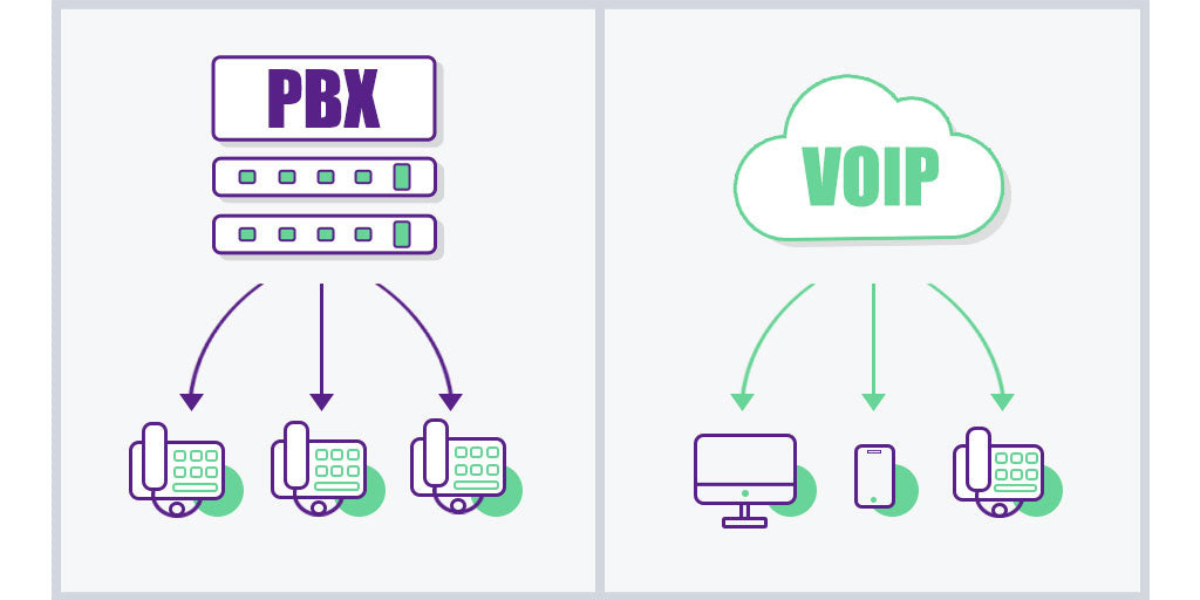
In today’s fast, paced business environment, communication plays a crucial role in the success of any organization. Businesses rely on efficient phone systems to connect with clients, employees, and partners. Two of the most popular communication systems in the market are PBX (Private Branch Exchange) and VoIP (Voice over Internet Protocol). Understanding the difference between PBX and VoIP is essential for businesses looking to improve their communication system while keeping costs manageable.
What is PBX?
A PBX system is a traditional telephone system used within an organization to manage internal and external calls. PBX acts as a private switchboard that connects all the phones within a company, allowing employees to communicate internally and externally without using multiple telephone lines.
PBX systems have been around for decades and are known for their reliability. They can be either traditional analog PBX or digital PBX, depending on the technology used. The main advantage of a PBX system is that it provides a centralized communication system that supports extensions, call transfers, voicemail, and conference calling.
Businesses in Karachi looking to install a PABX System Setup in Karachi often rely on PBX because it is proven, secure, and does not require an internet connection to function.
What is VoIP?
VoIP (Voice over Internet Protocol) is a modern communication technology that allows voice calls to be made over the internet instead of traditional phone lines. With VoIP, your voice is converted into digital signals and transmitted over an internet connection, making it more flexible and cost-effective than traditional PBX systems.
VoIP systems can be cloud-based or on-premises, depending on the business’s needs. Cloud-based VoIP eliminates the need for heavy hardware installations, while on, premises VoIP still requires some physical infrastructure but offers more control over the system.
The key benefit of VoIP is its ability to integrate with other digital tools such as CRM software, video conferencing, and instant messaging platforms. This makes it ideal for modern businesses that need a unified communication solution.
Key Differences Between PBX and VoIP
Understanding the differences between PBX and VoIP is critical for businesses making a decision about which system to implement. Here are the main differences:
1. Technology
- PBX: Works on traditional telephone lines (analog or digital).
- VoIP: Uses the internet to transmit calls digitally.
2. Cost
- PBX: Installation and maintenance can be expensive due to physical hardware and dedicated phone lines.
- VoIP: More cost, effective as it uses existing internet connections and minimal hardware.
3. Flexibility
- PBX: Less flexible. Expanding the system requires additional hardware and lines.
- VoIP: Highly flexible. Employees can make and receive calls from anywhere with an internet connection.
4. Features
- PBX: Offers essential features like call transfer, hold, voicemail, and conference calls.
- VoIP: Offers advanced features such as video calls, virtual receptionists, call analytics, and integration with other business software.
5. Maintenance
- PBX: Requires on-site maintenance and professional technicians for repairs.
- VoIP: Usually maintained by the service provider, reducing the need for technical support in-house.
6. Reliability
- PBX: Known for stability and consistent call quality, even during internet outages.
- VoIP: Dependent on internet speed and bandwidth. Poor internet can affect call quality.
Choosing Between PBX and VoIP
When deciding between PBX and VoIP, businesses should consider several factors:
- Business Size: Small to medium businesses often prefer VoIP due to low setup costs and flexibility. Large enterprises may choose PBX for its stability.
- Budget: VoIP is generally cheaper to install and maintain, while PBX requires higher upfront investment.
- Remote Work Needs: If employees work remotely, VoIP is the better option because it supports mobile and home office setups.
- Future Expansion: VoIP systems can scale easily with the business growth, while PBX expansions require additional hardware.
For companies in Karachi, a professional PABX System Setup in Karachi can help you install a reliable PBX system, while VoIP providers offer cloud-based solutions with minimal setup requirements.
Advantages of PBX
- Reliable Call Quality: PBX systems offer stable connections and clear voice quality.
- Security: Less vulnerable to hacking compared to internet-based systems.
- Control: Businesses have full control over the system and infrastructure.
Advantages of VoIP
- Cost Savings: Reduces phone bills, especially for long-distance and international calls.
- Flexibility: Employees can connect from anywhere using computers, smartphones, or IP phones.
- Integration: Connects with other business tools for better productivity.
- Scalability: Easy to add or remove users as your business grows.
Conclusion
Both PBX and VoIP have unique advantages, and the right choice depends on your business needs. PBX is ideal for businesses that prioritize stability, security, and control over communication. VoIP is suitable for businesses looking for flexibility, cost efficiency, and modern integration capabilities.
Businesses in Karachi can benefit from professional PABX System Setup in Karachi to ensure seamless communication. At the same time, VoIP solutions provide a modern approach to business communication without heavy infrastructure costs.
Choosing the right system will improve internal and external communication, enhance productivity, and ensure your business stays competitive in the digital era.
FAQs (Frequently Asked Questions)
- Can PBX and VoIP work together?
Yes, businesses can integrate VoIP with existing PBX systems using hybrid solutions to enjoy the benefits of both technologies. - Is VoIP cheaper than PBX?
Generally, yes. VoIP reduces costs on hardware, phone lines, and international calls compared to traditional PBX systems. - Do I need the internet for PBX?
No, traditional PBX systems work on analog or digital phone lines and do not require the internet. - Which system is better for remote employees?
VoIP is better for remote work because it allows employees to make and receive calls from anywhere with an internet connection. - How do I choose between PBX and VoIP for my business?
Consider your budget, business size, remote work needs, and future expansion plans. Businesses in Karachi can also consult with PABX System Setup in Karachi providers for professional advice.