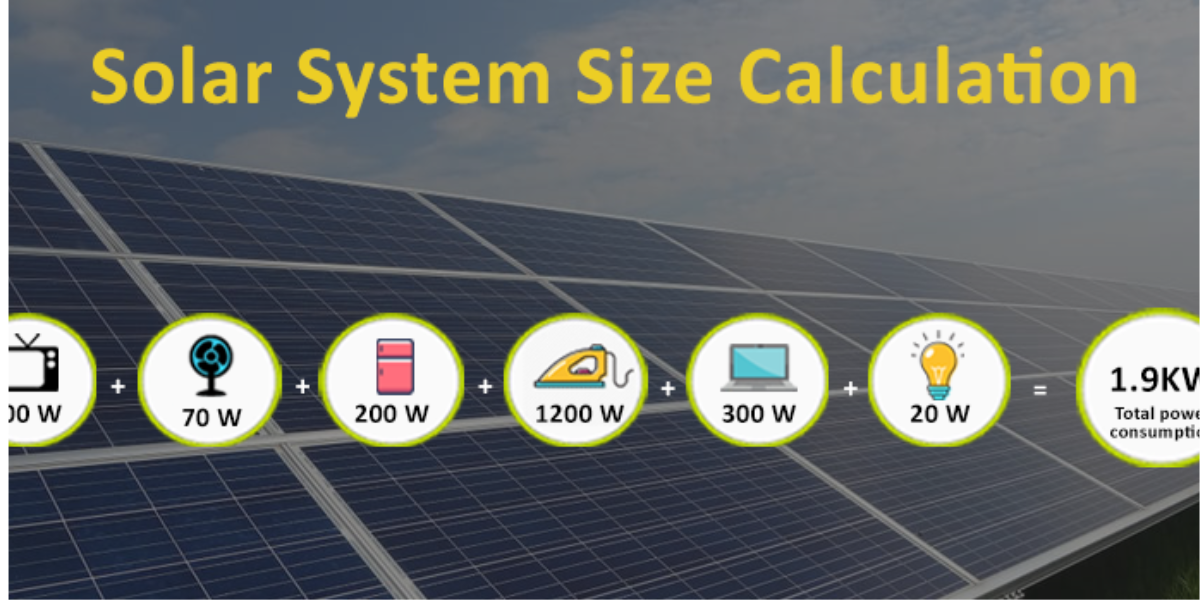
Solar energy is becoming one of the most popular and sustainable energy solutions around the world. In Pakistan, especially in Karachi, many homeowners and businesses are switching to solar power to reduce electricity bills and ensure uninterrupted energy supply. However, before installing a solar system, it is important to calculate the right size of your solar system. Installing an incorrectly sized system can either waste money or fail to meet your energy needs.
In this guide, we will explain step by step how to calculate the size of your solar system, the factors that affect the size, and tips to get the best results.
Why Calculating Solar System Size is Important
Calculating the size of your solar system is essential for several reasons:
- Meet Your Energy Needs: A properly sized solar system ensures that you generate enough electricity to cover your household or business consumption.
- Cost Efficiency: Installing an oversized system can increase upfront costs unnecessarily, while an undersized system may require additional panels later.
- Maximize ROI: A well, calculated system gives you the best return on investment by balancing energy savings and installation costs.
- Avoid Overloading: Correct sizing prevents overloading the inverter and other system components, ensuring a longer lifespan for your solar equipment.
For professional advice and installation, you can contact Solar Installation Service in Karachi to ensure accurate system sizing and reliable performance.
Step 1: Determine Your Energy Consumption
The first step in calculating your solar system size is to understand your electricity usage. You can do this by checking your electricity bills for the last 12 months. Most bills show energy consumption in kilowatt-hours (kWh).
Example:
If your monthly electricity consumption is 900 kWh, your annual consumption would be:
900 kWh×12=10,800 kWh/year900 \text{ kWh} \times 12 = 10,800 \text{ kWh/year}900 kWh×12=10,800 kWh/year
This figure is important because your solar system should generate close to this amount of electricity per year.
Step 2: Calculate Solar System Output
Once you know your energy consumption, you need to calculate how much electricity your solar system can produce. This depends on the sunlight hours in your location, efficiency of solar panels, and system losses.
- Find Sunlight Hours: Karachi receives an average of 5.5 hours of sunlight per day.
- Adjust for System Efficiency: Solar panels and inverters are not 100% efficient. Assume about 80% system efficiency.
The formula for calculating the system size (in kW) is:
System Size (kW)=Daily Energy Consumption (kWh)Sunlight Hours × System Efficiency\text{System Size (kW)} = \frac{\text{Daily Energy Consumption (kWh)}}{\text{Sunlight Hours × System Efficiency}}System Size (kW)=Sunlight Hours × System EfficiencyDaily Energy Consumption (kWh)
Example:
Daily energy consumption: 900 kWh÷30 days=30 kWh/day900 \text{ kWh} ÷ 30 \text{ days} = 30 \text{ kWh/day}900 kWh÷30 days=30 kWh/day
System Size=305.5×0.8≈6.8 kW\text{System Size} = \frac{30}{5.5 \times 0.8} \approx 6.8 \text{ kW}System Size=5.5×0.830≈6.8 kW
This means you would need a 6.8 kW solar system to cover your daily energy needs.
Step 3: Decide the Number of Solar Panels
The size of your solar system determines the number of panels you need. Solar panels come in different wattages, typically 300W, 350W, or 400W.
Formula to calculate the number of panels:
Number of Panels=System Size (kW) × 1000Panel Wattage\text{Number of Panels} = \frac{\text{System Size (kW) × 1000}}{\text{Panel Wattage}}Number of Panels=Panel WattageSystem Size (kW) × 1000
Example:
For a 6.8 kW system using 350W panels:
Number of Panels=6800350≈20 panels\text{Number of Panels} = \frac{6800}{350} \approx 20 \text{ panels}Number of Panels=3506800≈20 panels
So, you would need 20 solar panels of 350W each.
Step 4: Check Roof Space
Before finalizing the number of panels, you need to ensure your roof has enough space. Each solar panel requires around 1.6 m².
Example:
20 panels × 1.6 m² = 32 m²
Ensure your roof has at least 32 m² free space for the solar installation. If not, you may need fewer panels or a higher wattage panel.
Step 5: Factor in Future Energy Needs
It’s smart to plan for future electricity consumption. If you plan to add more appliances, air conditioners, or expand your home/business, consider sizing your solar system slightly larger. A 10–20% increase can prevent future upgrades.
Step 6: Consult a Professional
While these calculations give a good estimate, professional solar providers can fine, tune your system for maximum efficiency. They will consider:
- Shading from trees or buildings
- Seasonal sunlight variations
- Inverter sizing
- Battery storage (if needed)
For reliable and expert solar solutions, reach out to Solar Installation Service in Karachi for a customized solar system design.
FAQs About Calculating Solar System Size
- How much space do I need for a 5 kW solar system?
A 5 kW solar system requires around 25–30 m² of roof space, depending on panel wattage. - Can I calculate solar size without a professional?
Yes, you can estimate using your energy bills and sunlight hours. However, professionals ensure efficiency and consider shading and roof angles. - How does sunlight affect solar system size?
Areas with more sunlight require fewer panels, while locations with lower sunlight need a larger system to produce the same energy. - Should I include future energy use in the calculation?
Yes, adding 10–20% to your system size can accommodate future electricity needs and avoid additional costs. - How many solar panels do I need for a 10 kW system?
Using 350W panels, a 10 kW system requires around 29 panels. The exact number depends on panel wattage and roof space.