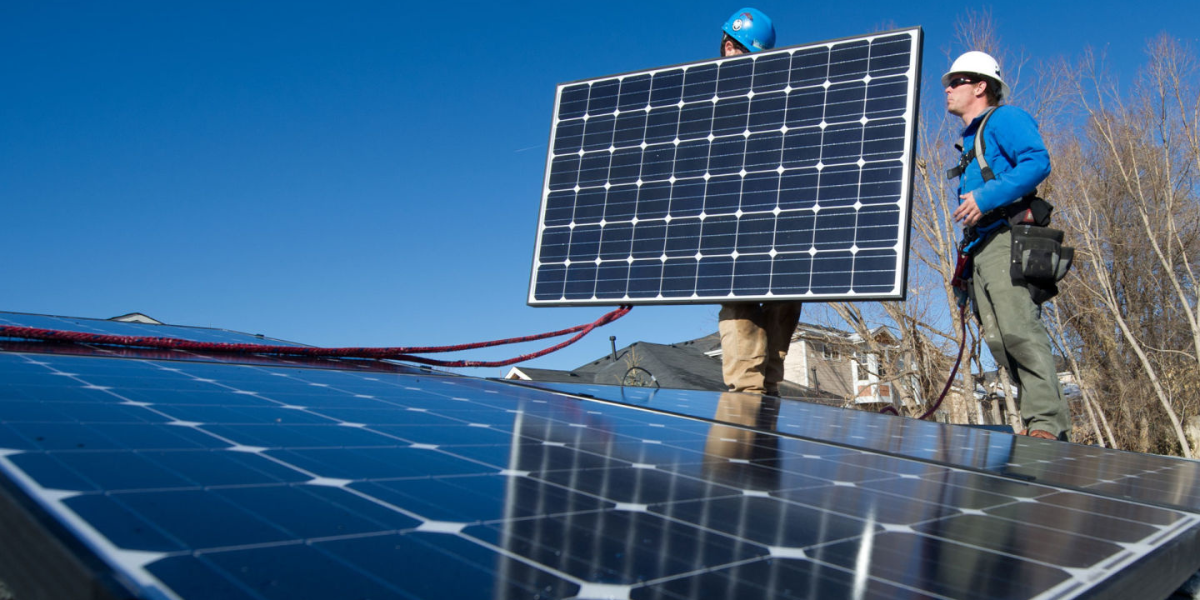
Installing solar panels is a smart investment, but correct angle and placement are just as important as panel quality. Even the best solar panels will not give full output if they are installed at the wrong angle or in a poor location.
This Solar Panel Angle and Placement Guide will help homeowners and businesses understand how to position solar panels properly for maximum energy production, especially in cities like Karachi where sunlight conditions are ideal for solar energy.
Why Solar Panel Angle and Placement Matter
Solar panels generate electricity by absorbing sunlight.
If panels do not face the sun correctly:
- Power output reduces
- Payback period becomes longer
- Energy losses increase
- System efficiency drops
Correct angle and placement can improve energy output by 20–30% without adding extra panels.
Understanding Solar Panel Angle (Tilt Angle)
What Is Solar Panel Tilt Angle?
The tilt angle is the angle between the solar panel and the ground.
This angle determines how directly sunlight hits the panel surface.
Best Solar Panel Angle in Karachi
Karachi is located at approximately 24.9° latitude.
The general rule is:
Solar Panel Tilt Angle = Local Latitude
For Karachi:
- Ideal tilt angle: 25° to 30°
This angle allows panels to receive maximum sunlight throughout the year.
Seasonal Tilt Angle Adjustment (Optional)
If you want even better performance, panels can be adjusted seasonally:
- Summer: Latitude – 10° → around 15°
- Winter: Latitude + 10° → around 35°
- Year-round fixed angle: 25°–30°
Most residential systems use a fixed tilt angle because it is cost-effective and low maintenance.
Best Direction for Solar Panel Placement
South-Facing Panels Are Best
In Pakistan, solar panels should face:
✅ True South
South-facing panels receive sunlight for the longest time during the day.
Avoid These Directions
- ❌ North-facing (low output)
- ❌ East or West only (less efficient unless space is limited)
If south-facing placement is not possible, south-east or south-west can still work with slightly reduced output.
Roof Placement Guidelines for Solar Panels
1. Shadow-Free Area Is Critical
Even a small shadow from:
- Trees
- Water tanks
- Nearby buildings
- Antennas
can reduce power output significantly.
One shaded cell can reduce output of the entire panel.
2. Roof Strength and Condition
Before installation, make sure:
- Roof can handle panel weight
- No leakage or cracks
- Proper waterproof mounting system is used
Professional Solar panel installation in Karachi services always inspect roof condition first.
Ground-Mounted Solar Panel Placement
If rooftop space is limited, ground-mounted systems are a good option.
Advantages:
- Easy angle adjustment
- Better airflow (cooling improves efficiency)
- Easy maintenance
Requirements:
- Open land with no shading
- Secure fencing
- Strong mounting structure
Ground-mounted systems are ideal for factories, warehouses, and large homes.
Distance Between Solar Panels (Row Spacing)
Panels should not block sunlight from each other.
General rule:
- Row spacing = 2 to 3 times panel height
Proper spacing prevents shading during winter when the sun is lower.
Importance of Airflow and Ventilation
Solar panels perform better at lower temperatures.
Good airflow:
- Prevents overheating
- Improves efficiency
- Increases lifespan
Never install panels flat on the roof without ventilation gap.
Common Solar Panel Placement Mistakes to Avoid
❌ Installing panels flat (0° tilt)
❌ Ignoring shadows
❌ Wrong direction (north-facing)
❌ No gap for airflow
❌ Poor mounting quality
Professional installers avoid these mistakes during Solar panel installation in Karachi.
Safety and Wiring Considerations
While planning placement, always consider:
- Safe cable routing
- Proper earthing
- Protection from water and heat
Solar system planning often goes hand-in-hand with other infrastructure services like PABX System Setup in Karachi, especially for commercial buildings that need both power and communication systems.
How Professionals Decide the Best Angle and Placement
Experts use:
- Sun path analysis
- Shadow analysis tools
- Roof orientation checks
- Energy consumption data
That’s why hiring professionals ensures:
- Maximum energy output
- Long system life
- Better return on investment
Solar Panel Angle and Placement for Commercial Buildings
For offices and industries:
- Large flat roofs need tilted mounting structures
- Panels should be aligned in rows
- Maintenance access paths must be kept
Commercial projects often integrate solar with IT and telecom infrastructure such as PABX System Setup in Karachi for smooth business operations.
Final Thoughts
Correct solar panel angle and placement are the foundation of an efficient solar system.
By choosing the right tilt angle, direction, and shadow-free location, you can significantly improve power generation without increasing costs.
If you want long-term savings and high performance, always rely on professional Solar panel installation in Karachi services that understand local sunlight conditions and building structures.
FAQs – Solar Panel Angle and Placement Guide
1. What is the best solar panel angle in Karachi?
The best fixed tilt angle is 25° to 30°, which matches Karachi’s latitude and provides year-round efficiency.
2. Can solar panels be installed flat on the roof?
Flat installation is not recommended. A tilt angle improves sunlight absorption and allows water and dust to slide off.
3. Do solar panels work if they are not facing south?
Yes, but output is lower. South-facing panels give the highest energy production in Pakistan.
4. How much space is needed between solar panels?
Panels should be spaced 2–3 times their height to avoid shading, especially in winter.
5. Why should I hire professionals for solar panel placement?
Professionals ensure correct angle, direction, shadow-free placement, safety, and maximum ROI through expert planning.